
Oxford Green Belt
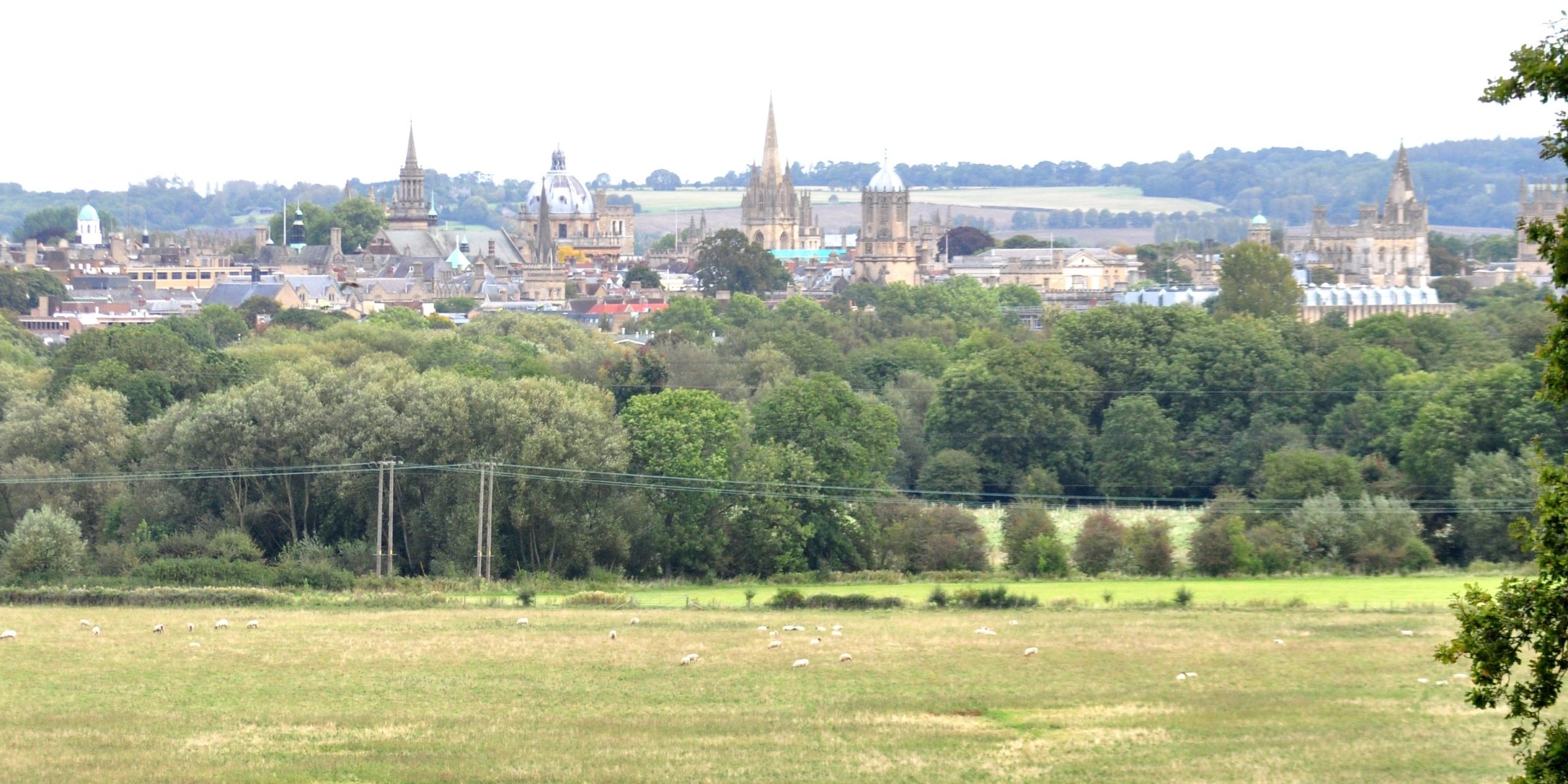
CPRE Oxfordshire campaigns to protect and enhance the Green Belt.
Our key goal is to persuade local authorities that the Green Belt should not be built on other than in genuinely exceptional circumstances, where the development is widely accepted as in the public interest and when it could only achieve its purpose if it were located on Green Belt land.
About the Oxford Green Belt
CPRE has campaigned for decades to preserve and strengthen Green Belts across the country. In the 1930’s CPRE supported the very first initiative of having a ‘Green Belt’ around London to restrain appalling urban sprawl.
Green Belts are not everywhere! Oxford is the only major urban area in Oxfordshire that has a designated Green Belt around it, see interactive map above.
Proposals for the Oxford Green Belt were submitted in 1958 with the outer boundaries approved in 1975 and the inner boundaries nearest the City finalised in the 1990’s. It covers land within the Oxford City Council area as well as parts of all four of the surrounding District Councils – Cherwell, South Oxfordshire, West Oxfordshire and the Vale of White Horse.
Oxfordshire County Council is responsible for some issues affecting the Green Belt, such as the public Rights of Way network and transport infrastructure.
Why we campaign for the Green Belt
The Oxford Green Belt is irreplaceable – once it is lost to development, it is gone forever.
Today, the Oxford Green Belt faces increasing pressure. In 2024, the government introduced the concept of the “grey belt”, claiming it would prioritise the development of previously used or low-quality land within the Green Belt. Examples cited included disused petrol stations, abandoned car parks and areas of low-value scrubland.
At first glance, this may appear to be a sensible “brownfield first” approach, which CPRE Oxfordshire supports. In practice, however, the “grey belt” designation is being used by developers to justify development across the Green Belt. The definition is so broad and imprecise that almost any site within the Green Belt could be placed under threat from development.
As such, CPRE Oxfordshire opposes the concept of a “grey belt” because it undermines the protection of the Green Belt and opens the door to inappropriate development on land that should be safeguarded for future generations.
Greying the Green belt
In its report, “Greying the Greenbelt”, the Community Planning Alliance (CPA) highlights examples of countryside and village-edge green fields being rebranded as ‘grey belt’ and becoming fair game for development. The report give the definition of the Green Belt from the governments National Planning Policy Framework and how the ‘grey belt’ policy fits in.
The CPA report concludes that “the many, well-known, benefits of Green Belts, including human well-being, natural capital, food production, carbon sequestration, flood prevention – and preventing urban sprawl, of course – have been swept away in a decision to reclassify land to meet poorly thought out housing targets. The result will be unchecked, car-dependent, urban sprawl into our much-loved countryside while doing very little to ease the housing crisis or the issue of ‘affordability’”.
You can read more here: Community Planning Alliance Report “Greying the Green Belt”
If this continues, the Green Belt will no longer play its vital planning role as described in national planning policy:
- Preventing urban sprawl
- Preventing merging of settlements (coalescence)
- Protecting the countryside from encroachment
- Preserving Oxford’s special character and setting
- Encouraging urban regeneration.
The Oxford Green Belt also fulfils other vital roles:
- The Green Belt provides the ‘countryside next door’ to the city and surrounding villages which is easily accessible for all kinds of recreation to improve and maintain mental and physical health, thereby reducing pressure on the NHS.
- The vegetation in the open countryside surrounding Oxford provides a carbon sink: absorbing carbon emissions created through human activity. Protecting our carbon sinks is an essential means of tackling climate change.
- The Green Belt is the city’s ‘green lung’ offering a large area of open countryside and clean air for all local people to enjoy, as well as supplying the source of unpolluted air which reduces air pollution levels within Oxford City.
- Farming and food production is an important priority to provide the security of locally sustainable food supplies in the Oxford Green Belt, with around 24,000 hectares in agricultural use.
- The Green Belt supports wildlife and biodiversity, providing wildlife corridors, species migration routes, nature networks and helping to restore habitats across open countryside.
- The Green Belt provides important resilience to the risk of flooding for rural and city communities: trees, hedges and planted fields catch rainfall, absorb water and slow water flow.
What we think
We need to protect the Oxford green Belt from further erosion. We need our local decision-makers to be more robust in protecting it. We also want them to show more ambition in increasing and enhancing Green Belt land so that, as well as the planning benefits it offers, it can fulfill its potential as a vital resource for tackling climate, health, biodiversity and food security challenges. Bicester and Didcot are urban areas where a Green Belt should be considered.