
Too Big, Too Costly, Too Damaging: CPRE Oxfordshire responds to Thames Water Reservoir consultation
12th January 2026
CPRE Oxfordshire has formally objected to Thames Water’s proposed South East Strategic Reservoir Option (SESRO), warning that the scheme would cause unacceptable harm to farmland, the countryside and rural communities, while failing to demonstrate clear need, value for money or sustainability.
In our response to Thames Water’s Statutory Consultation, CPRE Oxfordshire recognises the importance of planning for long-term water security in the South East in the context of climate change and population growth. However, we conclude that the current proposal does not meet the tests of necessity, proportionality or sustainability required of nationally significant infrastructure. You can read our official press release here, and the full response here. Below is a summary of our key concerns.
Excessive Land Take and Loss of Productive Farmland
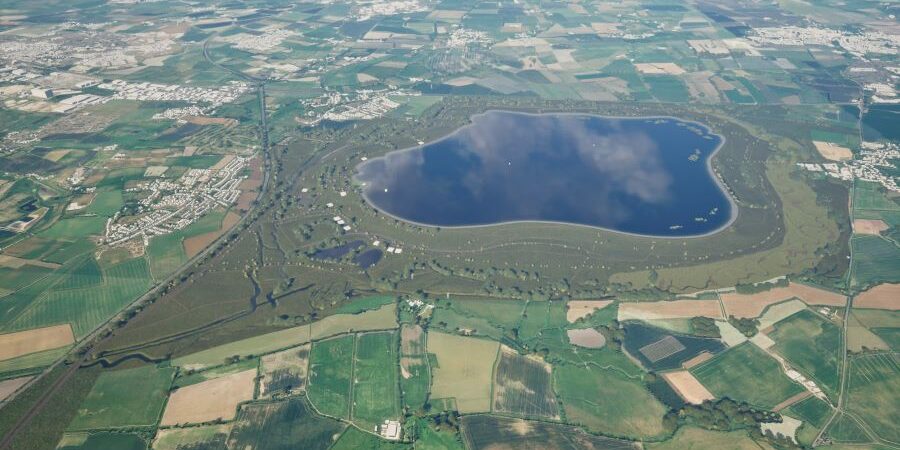
CPRE Oxfordshire is alarmed by the dramatic increase in land take associated with the reservoir. While the water body itself would cover around 6.7 km², the overall project footprint has expanded to approximately 38 km², permanently removing an estimated 3,800 hectares of agricultural land from potential food production. Much of this land is likely to be Best and Most Versatile (BMV) farmland.
A significant proportion of this enlarged footprint is required for biodiversity offsetting and associated infrastructure. At a time of growing concern about food security and climate resilience, CPRE Oxfordshire believes the irreversible loss of such a vast area of productive farmland cannot be justified without rigorous and compelling evidence and a clear demonstration that less damaging alternatives have been fully explored.
Rising Costs and Failure to Assess Alternatives
Thames Water has failed to robustly compare the reservoir with alternative options that could deliver water security at lower cost, with less land take, lower carbon emissions and greater flexibility, including the Severn–Thames transfer. With costs now estimated at £5.5–7.5 billion and rising alongside expanded land requirements for mitigation, CPRE Oxfordshire is calling for full financial transparency and a rigorous comparison with less damaging, better-value alternatives to protect both the environment and bill payers.
Solar Panels and Energy Land Use
CPRE Oxfordshire supports the use of floating solar panels on the reservoir surface to reduce carbon emissions. However, we strongly oppose using this as justification for relocating existing solar farms onto additional agricultural land. The charity urges Thames Water to prioritise the reservoir surface, rooftops and brownfield sites, and to fully account for the environmental and financial costs of displacing solar installations onto productive farmland.
Rights of Way and Access
While Thames Water highlights the creation of new paths, bridleways and cycle routes as a long-term benefit, CPRE Oxfordshire remains concerned about the disruption to existing public rights of way and local roads during the estimated 10-year construction period. The consultation must explain how access to the countryside will be maintained throughout construction, not simply after the reservoir is completed.
Biodiversity and Net Gain
CPRE Oxfordshire questions claims that the scheme will deliver significant biodiversity net gain. Any habitat creation must be supported by legally binding, long-term management and monitoring arrangements. Thames Water must clearly demonstrate how genuine, measurable biodiversity gains will be delivered in line with national guidance.
Alignment with Local Plans
Although local plans safeguard land for a potential reservoir, the greatly expanded footprint of the current proposal goes well beyond previous planning assumptions. CPRE Oxfordshire is calling on Thames Water to demonstrate that the revised design complies with local planning policies and the principles of sustainable development, including climate, agricultural and green belt considerations.
Misleading Landscape Representations
CPRE Oxfordshire challenges Thames Water’s illustrations showing trees planted on dam embankments, which are misleading and incompatible with dam safety standards. Engineering guidance prohibits trees on embankments due to the risk of structural damage. In reality, dam slopes can only support shallow-rooted grass or low scrub. CPRE is calling for inaccurate imagery to be removed and for clear explanations of how landscaping will comply with safety requirements.
Construction Impacts and Transport
A 10-year construction period would bring major disruption, including thousands of daily HGV movements, new access roads and diverted routes affecting local villages. CPRE Oxfordshire is calling for a full Strategic Transport Assessment to explain how traffic, noise, dust and visual impacts will be managed, how disruption will be minimised through construction phasing, and what improvements will be funded to protect rural lanes and junctions.
Impact on Farming and Rural Livelihoods
The proposed reservoir would affect multiple farms, including tenanted holdings, raising serious concerns about the impact on local livelihoods and agricultural businesses. CPRE Oxfordshire is calling on Thames Water to be transparent about farm losses, provide clear compensation and relocation arrangements for affected tenants, and set out a robust support package to protect rural livelihoods, including the use of local agricultural workers during construction.
Greenhouse Gas emissions and Climate Impacts
CPRE Oxfordshire is deeply concerned that the project’s carbon assessment is incomplete, uncertain and potentially misleading, significantly understating both construction and operational emissions. Major gaps include the apparent omission of methane emissions, unclear assumptions about material sourcing and transport, inconsistencies over soil disposal, and a misleading focus on national rather than local or regional carbon budgets.
With construction emissions alone estimated at over 1.2 million tonnes of CO₂e, CPRE Oxfordshire is calling for a fully revised and transparent “carbon budget” that accounts for all direct and indirect emissions, lost carbon sequestration from farmland, and the true net climate impact of the scheme, assessed against local and regional climate targets and net-zero commitments.
CPRE Oxfordshire believes Thames Water’s proposed reservoir is unnecessarily large, excessively costly and environmentally damaging. The scheme would result in the permanent loss of productive farmland, impose major disruption on rural communities, and generate significant carbon emissions, without clear evidence that it is the best or least harmful solution to future water needs.
Until Thames Water can provide robust evidence, full transparency and a genuine comparison with less damaging alternatives, CPRE Oxfordshire strongly opposes the project.